INNOVATIVE PROJECTS PLATFORM
To efficiently build on its Members' actions to promote or contribute to innovative technologies, regulation and business models, and partnerships across the value chain, ENTSOG has created the Innovative Projects Platform to map TSOs’ projects and partnerships on Research, Development and Innovation (RDI) activities for the energy transition.
This public platform provides information and links to enable exchange of best practices applied at national level and in some cases, across borders through partnership efforts.
These innovative solutions focus on topics such as repurposing infrastructure for renewable gases and projects for hydrogen, CCS and CO2 transport, biogas, energy system integration. These innovative applications support the achievement of the current EU goals of reducing GHG emissions and reaching the decarbonisation goal of net-zero by 2050.
*Disclaimer: The content published on this page is information owned by TSOs and not by ENTSOG. It is therefore published on behalf of TSOs. Please note terms and conditions of use of the website (including article 7) are fully applicable to this page.

Technology
Discover here how technologies can optimise the usage of the grid, make digital layer connections and support decarbonisation of the EU gas system. Technology R&D has a vital role in the energy transition. ENTSOG Members (TSOs) are developing new and innovative technologies to offer sustainable solutions for the gas sector.

Regulation & Business Model
Stay informed on how ENTSOG Members (TSOs) engage in development of the new energy products and services to foster uptake of renewable and decarbonised gases into the grid.

Partnership
Look at new partnerships and initiatives formed by ENTSOG’s Members (TSOs). They are actively working together as well as with various stakeholders on projects aimed at decarbonisation of the gas sector and of the whole EU economy.

Hydrogen
Hydrogen is a gas under standard conditions and there are also different hydrogen derivatives, such as ammonia and synthetic electrofuel. sHydrogen can be produced from diverse process technologies, such as electrolysis and steam-methane reforming (with or without carbon capture and permanent storage of this carbon to reduce emissions).

Repurposing for Renewable Gases
Repurposing of pipelines for renewable gases transport (e.g. hydrogen) is a cost effective way to meet decarbonisation goals and can be undertaken without compromising the ability of the natural gas network to ensure security of supply.

Biogas
Biogas is obtained via the anaerobic decomposition of the organic matter. After the process of upgrading, biogas becomes biomethane with the same quality standard as natural gas and can be transported via the existing grid infrastructure.

CCS and CO2 Transport
Carbon Capture and storage is the process of capturing CO2 from a set of possible sources, such as for example fossil fuel power plants, transporting it to a storage site, and depositing it underground on a permanent basis. The aim is to prevent the release of CO2 into the atmosphere.

Energy System Integration
Integrated infrastructure planning for electricity and gases is essential to support the decarbonisation of the energy system sector, particularly for facilitating the transport of renewable gases like hydrogen.

CNG
Compressed Natural Gas (CNG) is a fuel source that is made from compressing natural gas to less than 1% of its standard atmospheric volume. CNG combustion produces fewer climate-impacting gases than other fossil fuels.

Digitalisation
Digitalisation can bring various benefits to day-to-day operations such as enhanced control over the gas quality and cost reductions. TSOs look at data-driven solutions to boost performance, efficiency and competitiveness.

Heating & Cooling
Cutting the energy consumption in heating and cooling in buildings and industry can be achieved through various technologies. TSOs are working on developing cost-efficient solutions for the decarbonisation of this sector.

Certification of green gases
To ensure the cross-border scale up and tradability of renewable, decarbonised and low-carbon gases. This can be achieved via pan European Guarantees of Origin and Certification Schemes.
Snam, TAG GmbH, bayernets, Gas Connect Austria
SoutH2 Corridor
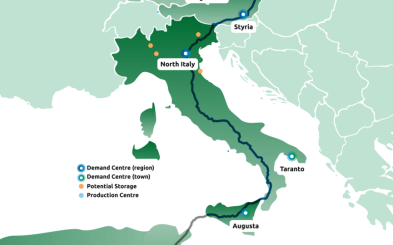
A 3,300 km dedicated hydrogen pipeline corridor connecting North Africa, Italy, Austria, and Germany, led by TSOs Snam, TAG, GCA, and bayernets. Recognized as a Project of Common Interest under the TEN-E Regulation, it aims to import over 4 Mtpa of green hydrogen from North Africa to Central Europe's largest hard-to-abate demand clusters, with roughly 65% of the route using repurposed infrastructure. Targeted to be in operation in the early 2030s.
Contacts: commercialservices@taggmbh.at, sales@gasconnect.at,
info@bayernets.de, or south2corridor@snam.it
NaTran, Energinet
GREENCONNECT Project
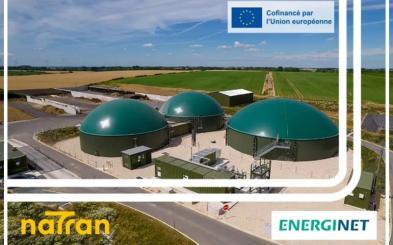
GREENCONNECT aims to facilitate the integration of biomethane into European gas networks through the deployment of reverse-flow installations. Developed jointly by Natran and Energinet, the project has been recognised by the European Commission as a Project of Common Interest (PCI). Reverse-flow stations enable surplus biomethane produced in local distribution networks to be transported to national transmission systems, supporting the REPowerEU target of 35 bcm of biomethane by 2030. The project promotes knowledge sharing, faster infrastructure deployment, and the development of best practices for biomethane integration across Europe.
Contact: Martin Graversgaard (mgn@energinet.dk)
bayernets
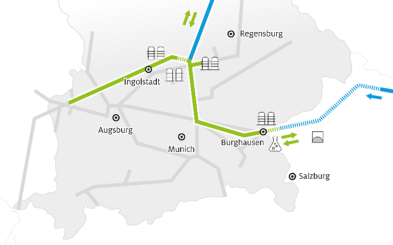
HyPipe One - Bavaria Hydrogen Network
HyPipe Bavaria Hydrogen Backbone aims to establish the core hydrogen infrastructure required to connect Bavaria to the European hydrogen market by 2030. The project is recognised as a Project of Common Interest (PCI) and forms part of the European Hydrogen Backbone initiative. Through the repurposing of existing gas infrastructure and the development of new hydrogen assets, it will connect hydrogen demand centres in Bavaria with production regions in Germany and abroad, enabling hydrogen imports, supporting industrial decarbonisation, and strengthening security of supply.
Contact: Simona Rens (simona.rens@bayernets.de)
Snam Rete Gas S.p.A., Enni
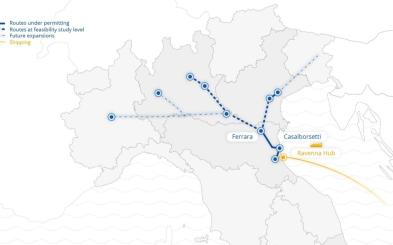
Ravenna CCS Project
Ravenna CCS aims to develop Italy’s first large-scale carbon capture and storage value chain through the repurposing of existing gas infrastructure. Captured CO₂ will be transported via converted gas pipelines and permanently stored in depleted offshore gas fields in the Adriatic Sea. Developed by Eni and Snam, the project supports the decarbonisation of hard-to-abate industries while reusing existing energy assets to create one of the largest CO₂ storage hubs in Europe and the Mediterranean.
Contact: info_ravenna_ccs@snam.it
Energinet
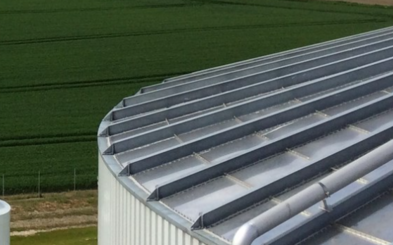
DSO - TSO reverse flow project
The objective of this reverse flow project from DSO grid to TSO grid, is to ensure the integration of excess biomethane in the distribution grid into the transmission grid. The project is a virtual aggregation of three future physical projects establishing reverse flows from DSO grid to TSO grid. When supply of biomethane in the high-pressure distribution grid exceeds demand, high-pressure compressors lift the gas to the TSO grid (20/40 bar to 80 bar), where odor in the gas is removed also. These are reverse flow facilities.
Contact: Martin Graversgaard (mgn@energinet.dk)
NaTran, Creos Deutschland, Creos Luxembourg
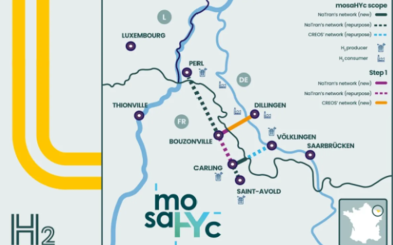
MosaHYc
mosaHYc (Moselle-Saar Hydrogen Conversion) is one of Europe’s first cross-border hydrogen infrastructure projects based on the repurposing of existing natural gas assets. The project will convert around 94 km of pipeline between France and Germany into an open hydrogen transport network, connecting industrial consumers with future hydrogen production facilities. By reusing existing infrastructure, mosaHYc supports a cost-efficient and resource-efficient transition to hydrogen and is expected to avoid approximately 0.7 million tonnes of CO₂-equivalent emissions per year in key industrial sectors, notably the steel industry.
Contact: blg-grt-mosahyc@natrangroupe.com
Gas Connect Austria GmbH
WAG LOOP 1 Pipeline
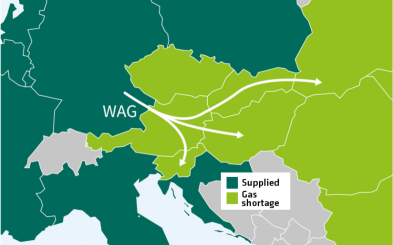
WAG Loop 1 aims to strengthen Austria’s security of supply by expanding the West Austria Gas Pipeline (WAG) with a 40 km parallel pipeline section between Oberkappel and Bad Leonfelden. The project will increase west-to-east transmission capacity, improving access to gas supplies from Northwestern Europe and LNG import terminals. It will also enhance supply flexibility for Austria and neighbouring countries while laying the groundwork for future hydrogen transport as part of the European Hydrogen Backbone and SouthH2 Corridor initiatives.
Contact: Armin Teichart (armin.teichert@gasconnect.at)
Energinet, TenneT, Gasunie
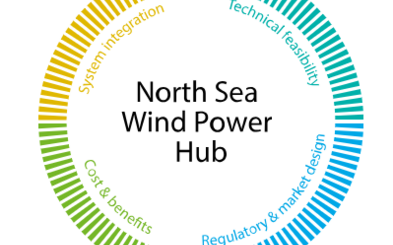
North Sea Wind Power Hub
An opportunity for internationally coordinated, large scale, far offshore wind energy from the North Sea. An opportunity which would deliver energy at competitive prices around 2030 and facilitate meeting the Paris agreement. We are committed to explore and develop regional socio-economic beneficial and reliable offshore infrastructure, including possible conversion into P2G, that supports wind farm operations and interconnections between markets. Average daily production of H2 is 30 GWh/d.
Contact: Martin Graversgaard (mgn@energinet.dk)
DESFA, Bulgartransgaz, Transgaz, FGSZ, eustream, NET4GAS, OGE, NaTran Deutschland
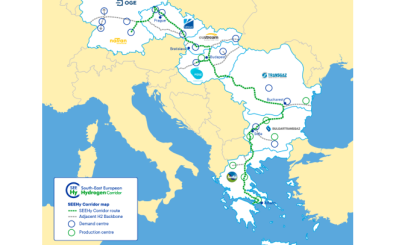
South-East European Hydrogen Corridor
SEEHyC initiative aims to establish a hydrogen interconnector linking high-potential hydrogen supply areas in South-East Europe with expected high-demand clusters in the EU, primarily in South Germany and North Bohemia. Additionally, it will connect local suppliers and consumers along the corridor. The pipeline will span over 3,000 km, enabling the transmission of renewable and low-carbon hydrogen. According to the ongoing pre-feasibility study, the project aims to be operational by 2030, with a minimum transport capacity of up to 80 GWh of hydrogen per day, or approximately 0.8 million tonnes per year.
Contact: karin.stehlik@net4gas.cz
GAZ-SYSTEM
GDANSK FSRU Terminals
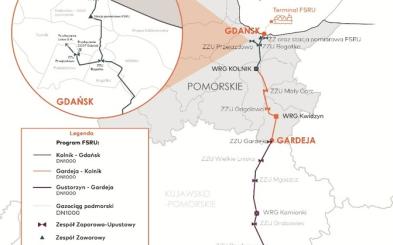
Gdańsk FSRU Terminal is a strategic LNG infrastructure project designed to enhance energy security and supply diversification in Poland and the wider region. Located in the Gulf of Gdańsk, the terminal will include a floating storage and regasification unit (FSRU) with a regasification capacity of around 6.1 bcm of gas per year, connected to the national transmission system through offshore infrastructure and approximately 250 km of new onshore gas pipelines. The project has been recognised as an EU Project of Common Interest (PCI) and is expected to strengthen regional gas supply flexibility and resilience.
Contact: kontakt@gaz-system.pl