INNOVATIVE PROJECTS PLATFORM

Partnership
Partnerships are a great way forward to enable decarbonisation of the gas sector. ENTSOG’s Members - the gas TSOs - are engaging in new partnerships and initiatives and are actively working together with various private stakeholders on projects aimed to offer sustainable solutions for the gas sector and of the whole EU economy. The Gas for Climate Initiative is one example of one such partnership group.
Snam, TAG GmbH, bayernets, Gas Connect Austria
SoutH2 Corridor
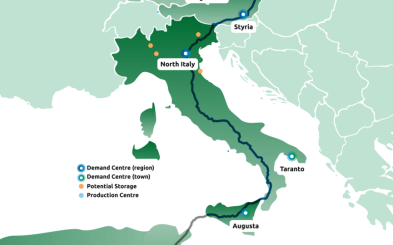
A 3,300 km dedicated hydrogen pipeline corridor connecting North Africa, Italy, Austria, and Germany, led by TSOs Snam, TAG, GCA, and bayernets. Recognized as a Project of Common Interest under the TEN-E Regulation, it aims to import over 4 Mtpa of green hydrogen from North Africa to Central Europe's largest hard-to-abate demand clusters, with roughly 65% of the route using repurposed infrastructure. Targeted to be in operation in the early 2030s.
Contacts: commercialservices@taggmbh.at, sales@gasconnect.at,
info@bayernets.de, or south2corridor@snam.it
NaTran, Energinet
GREENCONNECT Project
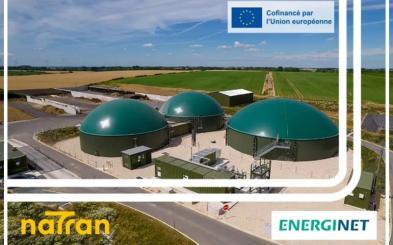
GREENCONNECT aims to facilitate the integration of biomethane into European gas networks through the deployment of reverse-flow installations. Developed jointly by Natran and Energinet, the project has been recognised by the European Commission as a Project of Common Interest (PCI). Reverse-flow stations enable surplus biomethane produced in local distribution networks to be transported to national transmission systems, supporting the REPowerEU target of 35 bcm of biomethane by 2030. The project promotes knowledge sharing, faster infrastructure deployment, and the development of best practices for biomethane integration across Europe.
Contact: Martin Graversgaard (mgn@energinet.dk)
NaTran, Creos Deutschland, Creos Luxembourg
MosaHYc
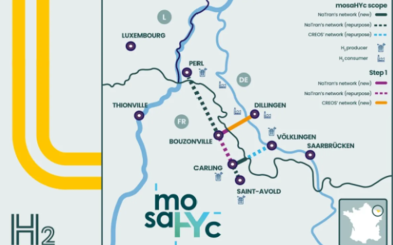
mosaHYc (Moselle-Saar Hydrogen Conversion) is one of Europe’s first cross-border hydrogen infrastructure projects based on the repurposing of existing natural gas assets. The project will convert around 94 km of pipeline between France and Germany into an open hydrogen transport network, connecting industrial consumers with future hydrogen production facilities. By reusing existing infrastructure, mosaHYc supports a cost-efficient and resource-efficient transition to hydrogen and is expected to avoid approximately 0.7 million tonnes of CO₂-equivalent emissions per year in key industrial sectors, notably the steel industry.
Contact: blg-grt-mosahyc@natrangroupe.com
Gas Connect Austria GmbH
WAG LOOP 1 Pipeline
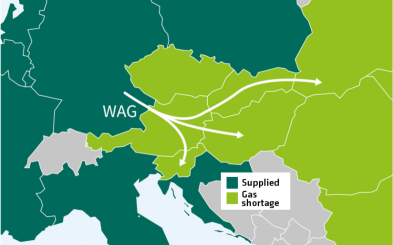
WAG Loop 1 aims to strengthen Austria’s security of supply by expanding the West Austria Gas Pipeline (WAG) with a 40 km parallel pipeline section between Oberkappel and Bad Leonfelden. The project will increase west-to-east transmission capacity, improving access to gas supplies from Northwestern Europe and LNG import terminals. It will also enhance supply flexibility for Austria and neighbouring countries while laying the groundwork for future hydrogen transport as part of the European Hydrogen Backbone and SouthH2 Corridor initiatives.
Contact: Armin Teichart (armin.teichert@gasconnect.at)
Energinet, TenneT, Gasunie
North Sea Wind Power Hub
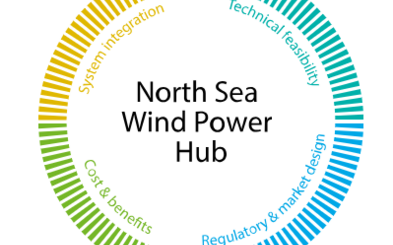
An opportunity for internationally coordinated, large scale, far offshore wind energy from the North Sea. An opportunity which would deliver energy at competitive prices around 2030 and facilitate meeting the Paris agreement. We are committed to explore and develop regional socio-economic beneficial and reliable offshore infrastructure, including possible conversion into P2G, that supports wind farm operations and interconnections between markets. Average daily production of H2 is 30 GWh/d.
Contact: Martin Graversgaard (mgn@energinet.dk)
DESFA, Bulgartransgaz, Transgaz, FGSZ, eustream, NET4GAS, OGE, NaTran Deutschland
South-East European Hydrogen Corridor
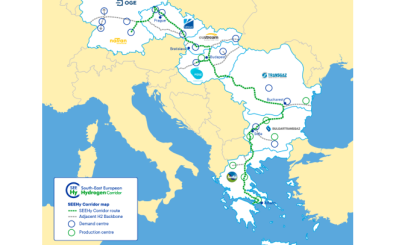
SEEHyC initiative aims to establish a hydrogen interconnector linking high-potential hydrogen supply areas in South-East Europe with expected high-demand clusters in the EU, primarily in South Germany and North Bohemia. Additionally, it will connect local suppliers and consumers along the corridor. The pipeline will span over 3,000 km, enabling the transmission of renewable and low-carbon hydrogen. According to the ongoing pre-feasibility study, the project aims to be operational by 2030, with a minimum transport capacity of up to 80 GWh of hydrogen per day, or approximately 0.8 million tonnes per year.
Contact: karin.stehlik@net4gas.cz
GAZ-SYSTEM
GDANSK FSRU Terminals
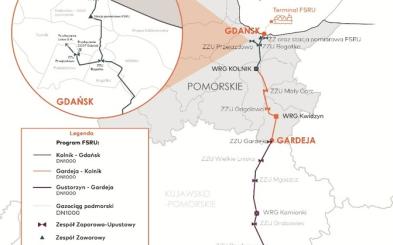
Gdańsk FSRU Terminal is a strategic LNG infrastructure project designed to enhance energy security and supply diversification in Poland and the wider region. Located in the Gulf of Gdańsk, the terminal will include a floating storage and regasification unit (FSRU) with a regasification capacity of around 6.1 bcm of gas per year, connected to the national transmission system through offshore infrastructure and approximately 250 km of new onshore gas pipelines. The project has been recognised as an EU Project of Common Interest (PCI) and is expected to strengthen regional gas supply flexibility and resilience.
Contact: kontakt@gaz-system.pl
Transitgas AG, SWISSGAS AG, FluxSwiss Sagl, Ganeos AG
SWISS Gas NETWORKs - CH42 Initiative
CH42 Network Transformation Plan for Renewable Gases brings together 25 Swiss gas network operators to coordinate the transition of the country’s gas infrastructure towards renewable gases by 2050. The initiative covers around 50% of Switzerland’s distribution network, 98% of its transmission network and 60% of national gas consumption. Initial assessments show that 77% of analysed distribution pipelines are already hydrogen-compatible, supporting the future integration of biomethane, renewable hydrogen and synthetic methane.
Contact: vsg@gazenergie.ch
ENAGAS TRANSPORTE S.A.U, Veolia, Barcelona City Council
First sustainable urban cold recovery network at an LNG terminal
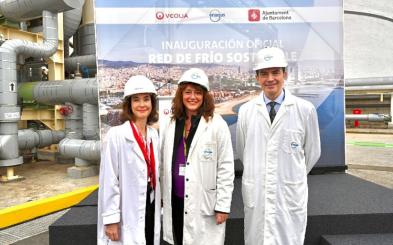
Barcelona LNG Cold Recovery Network aims to recover residual cold from the regasification process at the Enagás LNG terminal and convert it into sustainable energy for industrial, commercial and residential users. Developed by Enagás, Veolia and the Barcelona City Council, the project supplies low-carbon cooling through Southern Europe’s largest district cooling network. By recovering energy that would otherwise be lost, it supports decarbonisation, improves energy efficiency, and avoids more than 32,000 tonnes of CO₂ emissions annually.
Contact: dircom@enagas.es
Fluxys, OGE
TENP III Pipeline
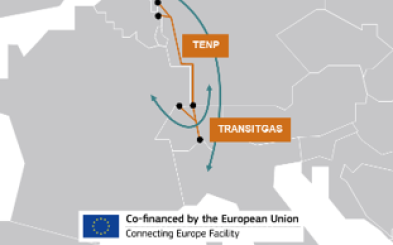
TENP III aims to strengthen security of supply in Germany and Europe through the modernisation of the Trans-Europe Natural Gas Pipeline connecting Northwest Europe with Switzerland and the Italian gas market. Developed by Open Grid Europe (OGE) and Fluxys TENP, the 110 km pipeline increases transport flexibility through bidirectional flows and is fully hydrogen-ready. The project supports future hydrogen imports from Southern Europe while ensuring reliable energy transport and reinforcing cross-border connectivity.
Contact: Isabelle Wippich (Isabelle.Wippich@oge.net)